Turning the spreadsheet into the submission itself.
Hundreds of public-sector enterprises retyped a year of Excel into a seven-step portal — for figures laid before Parliament. I stopped trying to replace the spreadsheet and made it the pipeline.
- Role
- UX Designer, design lead — research, interaction, rollout
- Timeframe
- 2024–25
- Context
- Department of Public Enterprises, Ministry of Finance · a report laid before both Houses
- Team
- NIC engineering & security · DPE IT leadership · 25 enterprises in discovery, 37 in the pilot
Some details are abstracted to respect government / NDA constraints; figures shown are approved for sharing. Ask for more in conversation.
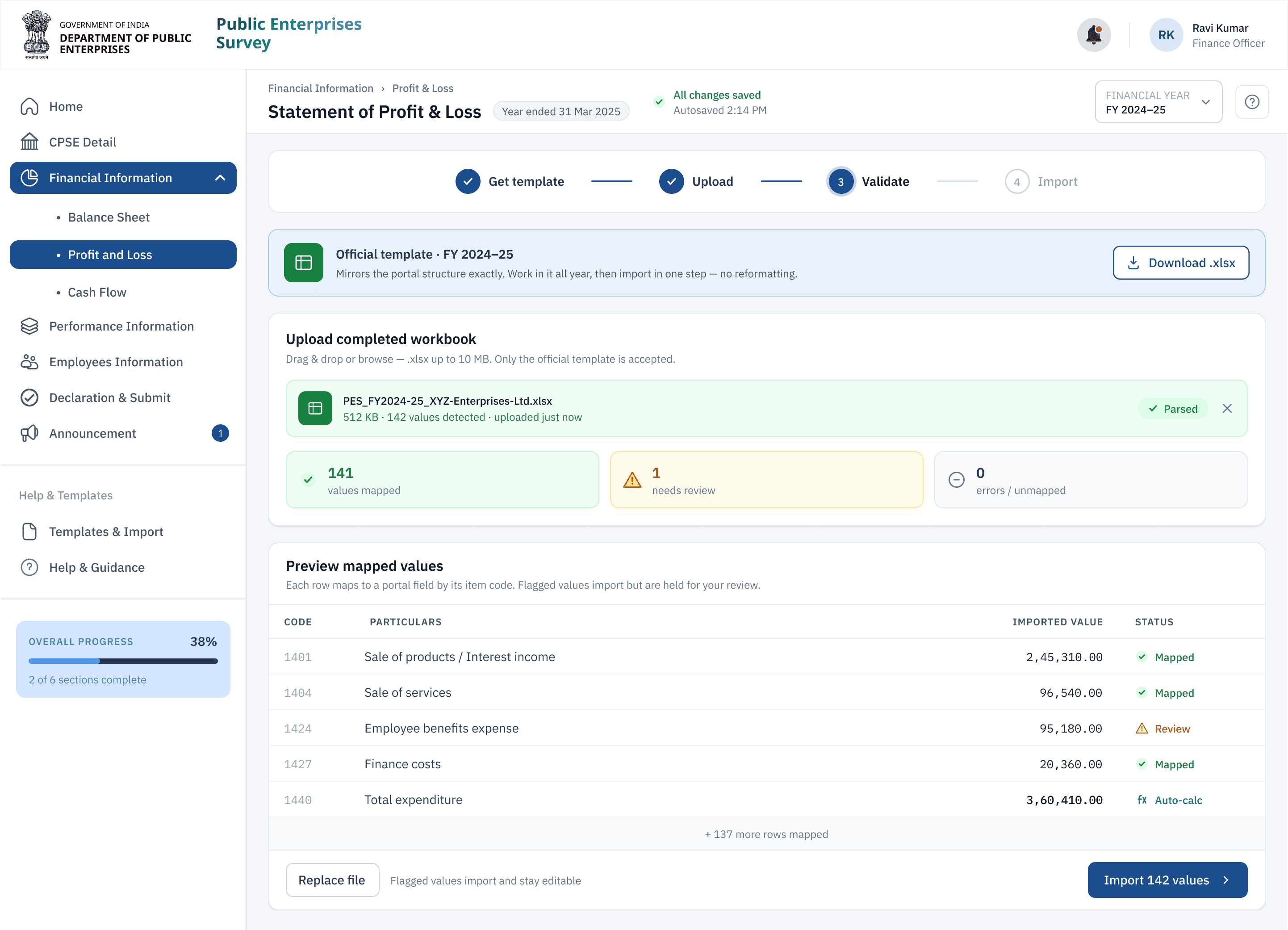
After the rebuild, a finance team works in the same workbook it always did, and the portal takes it whole — every value mapped to its field, with only the ambiguous one held for review.
Shipped, 2025The portal acted like the system of record. The spreadsheet already was one.
A report read in Parliament, assembled by copy-paste.
Once a year the financial health of every Central Public Sector Enterprise in India is compiled into one report and laid before both Houses. The Public Enterprises Survey is mandatory, high-stakes, and unforgiving of error. The data behind it was being assembled by hand.
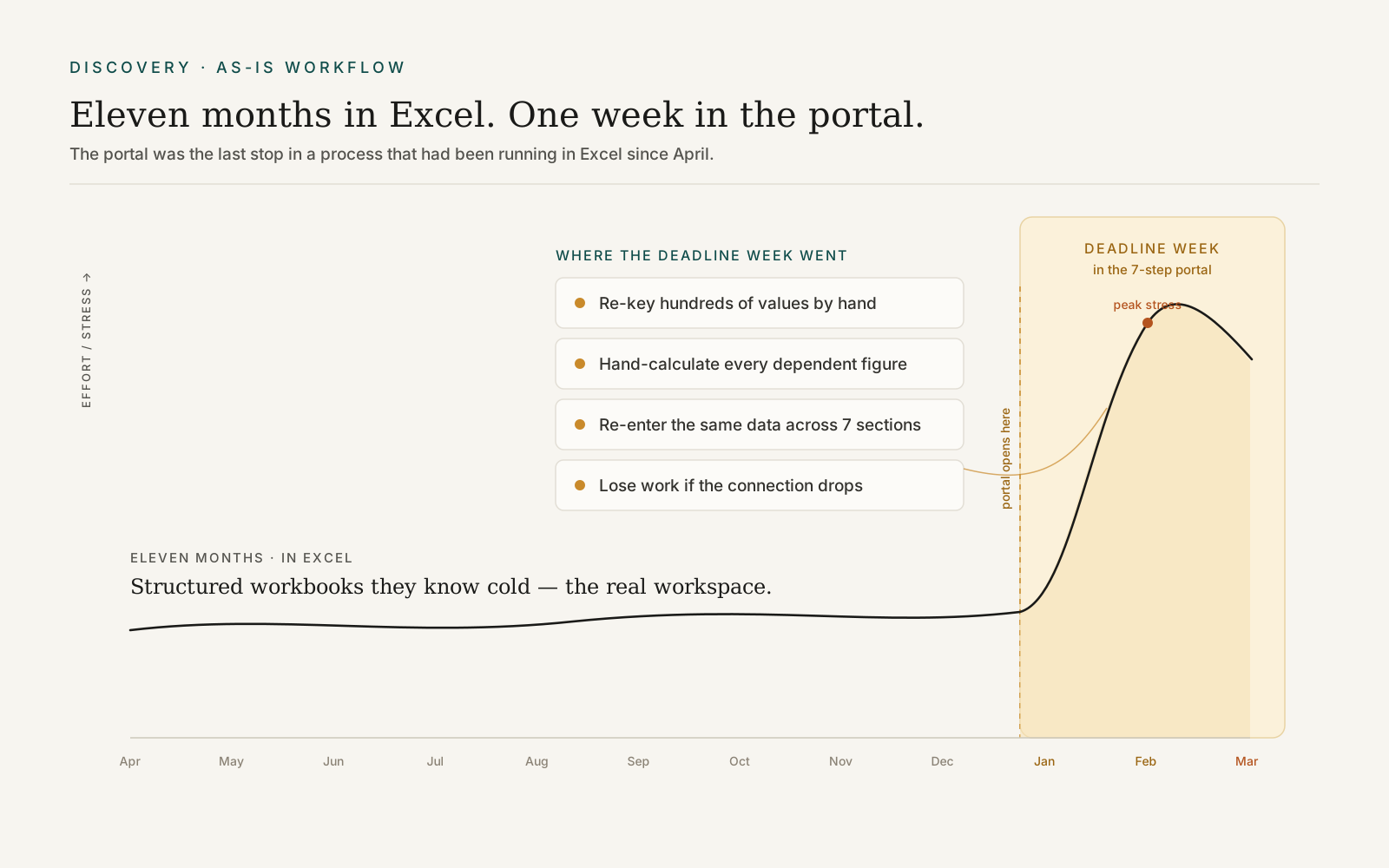
Finance teams kept their numbers in Excel all year — structured workbooks they knew cold. Then, near the deadline, they opened a seven-step portal and retyped everything: hundreds of values copied across, dependent figures recalculated by hand, the same information asked for more than once. The brief I was handed was “make the form easier.” The deeper problem was that the form existed in the wrong place.
“We did the whole year in Excel, then did it all again inside the portal. It felt like reporting twice.”
One thing was obvious in the first session: the portal wasn't their workspace. Excel was. They lived in those workbooks for months and only opened the portal at the deadline to transcribe them. That reframed the project. The goal wasn't a cleaner seven-step form — it was to stop making people do their year's work twice.
- 01Teams maintained structured Excel workbooks for most of the year before touching the portal.
- 02The seven portal sections repeated values and dependencies between them.
- 03Dependent figures were calculated by hand, then keyed in — a quiet, constant source of errors.
- 04The portal was opened late, under deadline pressure, in one long anxious sitting.
Two systems of record for one set of numbers.
On paper the portal was the filing system. In practice the workbook was — reviewed by a CA, signed off internally, argued over for months. The portal only ever received a copy of it, typed in a second time by the same people who had already produced it.
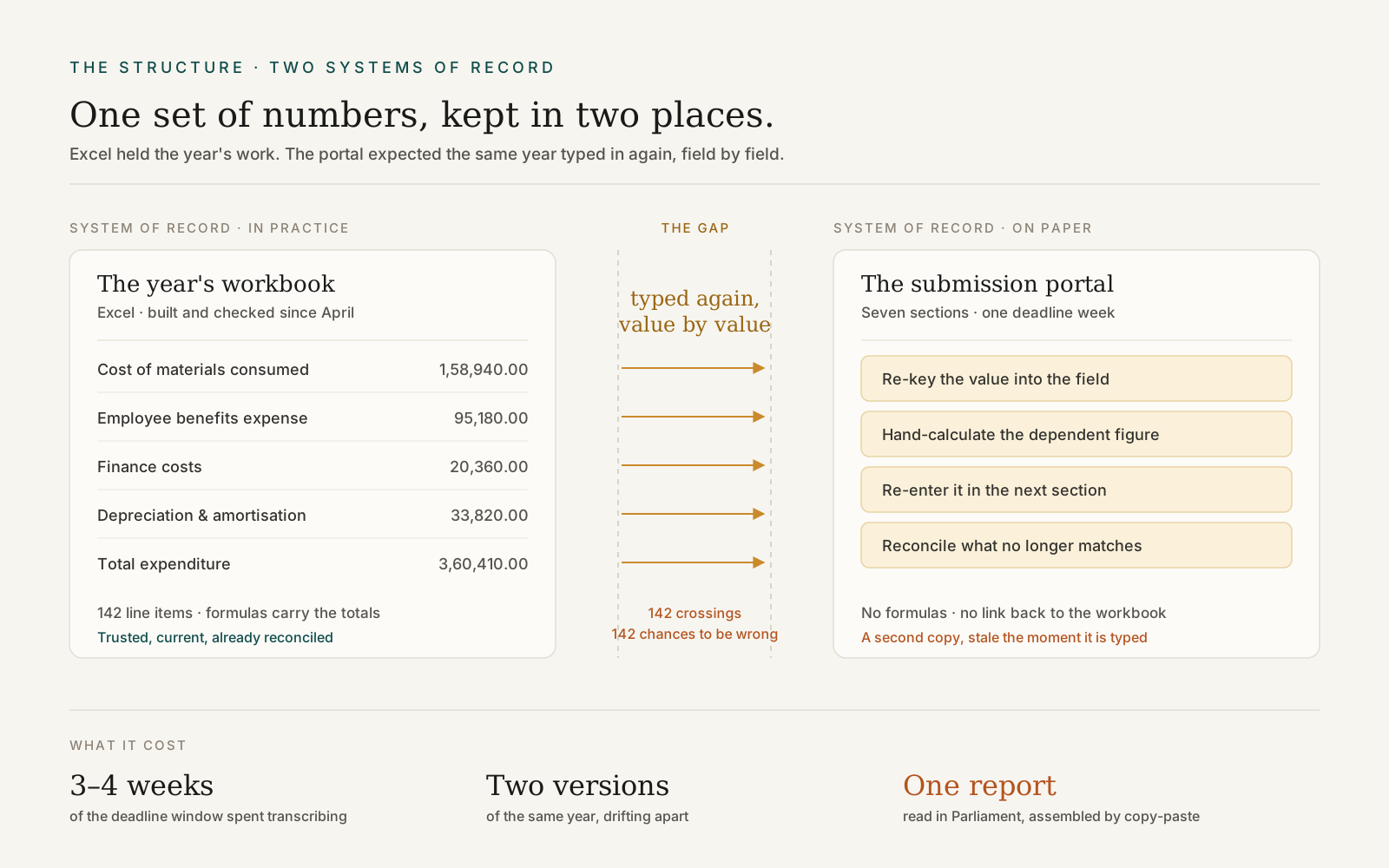
The spreadsheet wasn't the workaround. It was the work.
A better form was still the wrong answer.
Every voice in the room pointed at the form. Before proposing that the spreadsheet become the submission, I ran the three safer answers against the problem.
- Simplify the seven-step form
Cheapest to ship — and it would still have been a year of work typed twice.
- Build a better importer
A tolerant parser for whatever file arrived: endless edge cases, no shared structure, no trust.
- Add stronger validation
Catching typos faster, in an interface that was manufacturing them.
- Validation treats the symptom. The error rate came from re-entry, so the re-entry had to go.
- An importer without a shared template is a guessing machine. The template was the product.
- The real question sat beneath the UI: which artefact the process treated as true.
Don't replace the spreadsheet. Ship it — as the portal's own template.
I could have built a better importer and called it a win. Instead I redesigned the process around it: before every cycle each organisation receives an official Excel template that matches the portal's structure exactly. They keep working in Excel all year — the way they always have — and at the deadline the whole workbook imports in a single step. I didn't design an import button. I redesigned the year around it.
NIC's fair question. The answer was to make it not feel like ours: I collected the workbooks 25 enterprises had kept for years and rebuilt the template to mirror them — same layout, same formulas, nothing new to learn. Asked directly, all 25 said the same thing: if it matches what we already use and adds no work, we'll use it.
A server-side signature on every official template, so no foreign sheet could take its place — and a C-DAC e-Sign binding each upload to the account holder, so a submission carried accountability, not just data.
A template only works when it disappears into a habit people already have. That is the whole bet: the structure people had built for themselves became the interface, and the portal's job narrowed to parsing, calculating, validating and submitting.
- Build the year's return in Excel
- Open the seven-step portalat the deadline
- Re-key hundreds of valuesreported twice
- Hand-calculate dependent figureserror source
- Reconcile mismatches, chase totals
- Re-verify the entire datasetnobody really does
- Submit
Seven sections of re-entry, opened at the deadline in one anxious sitting — and every value that crossed from the workbook by hand was a chance to get a parliamentary figure wrong.
A year reported twice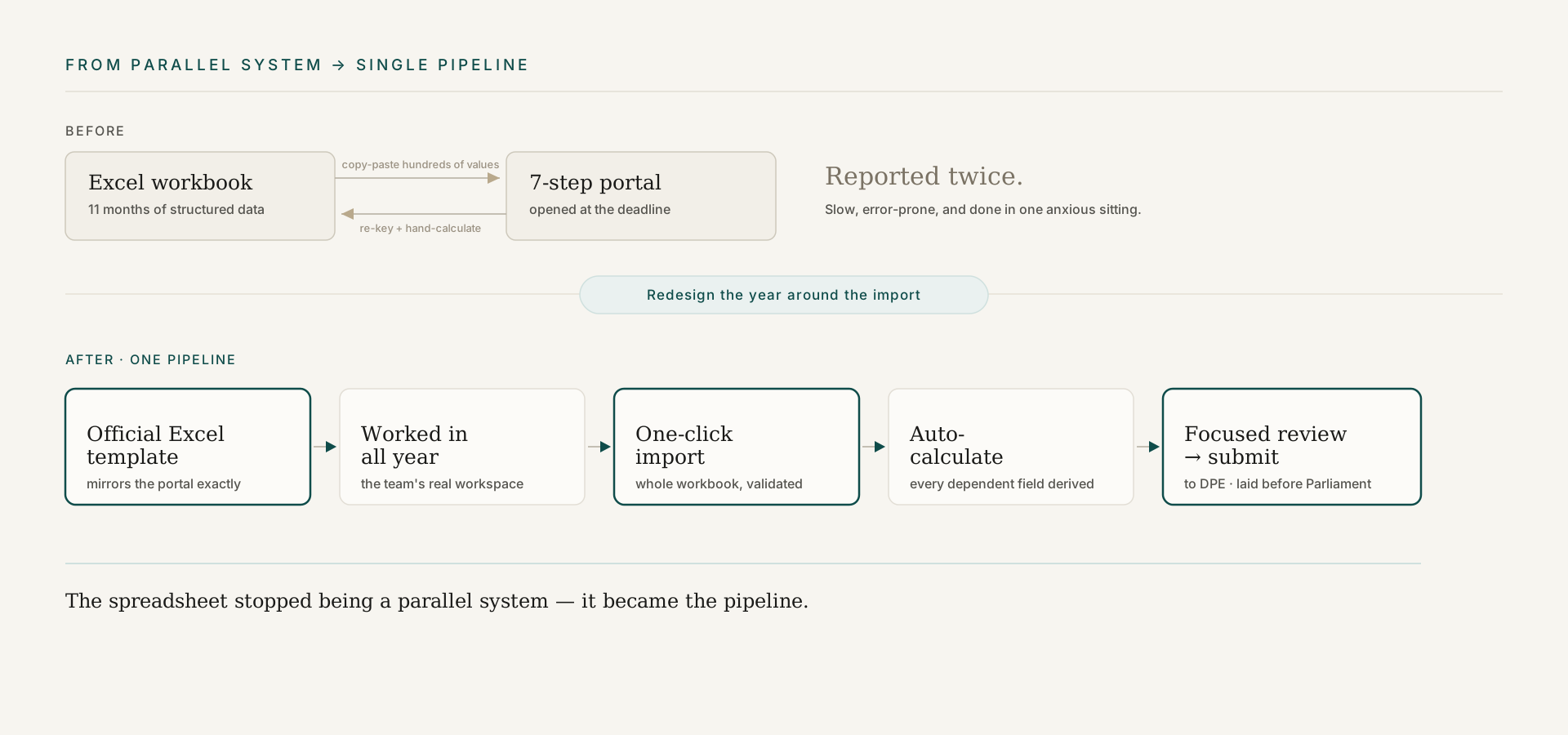
What guided the redesign.
- 01Design around the behaviour people already have, not the one a portal wishes for.
- 02Remove repetition — never ask for the same value twice.
- 03Calculate, don't ask — if the system can derive it, no person should.
- 04Protect accuracy and confidence at every step — these numbers go to Parliament.
A template that disappears into a habit.
Instead of handing out a blank new format, I studied how 25 enterprises had structured, formatted and formula-driven their own workbooks for years, and rebuilt the portal's template to mirror them. The year's work now lands in the right shape from day one, because the shape never changed.
- A year in Excel, then weeks of re-keying
- Dependent figures recalculated by hand
- One long anxious sitting at the deadline
- The official template is the team's own workbook
- One-step import, validated cell by cell
- A focused review, then submit
- 01Start from the official template
The portal's structure, shipped as the spreadsheet teams already use.
- 02Import in one step
The completed workbook uploads directly, with validation catching mismatches before they become problems.
- 03Let the portal do the math
Every dependent figure is derived as source values arrive — no manual recalculation, far fewer errors.
- 04Review only what matters
Critical figures, mandatory fields and warnings — not the entire dataset.
A year's workbook, uploaded once.
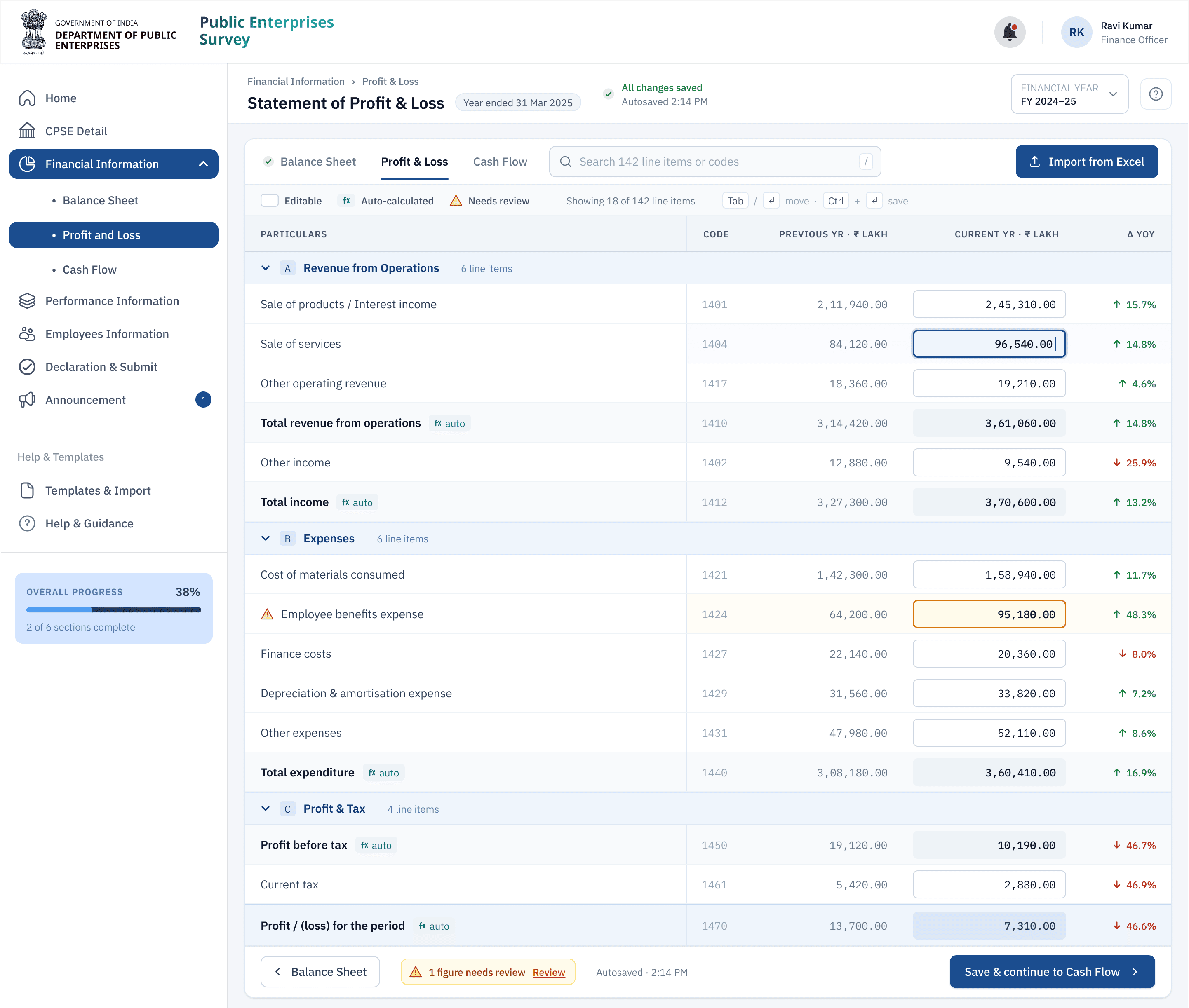
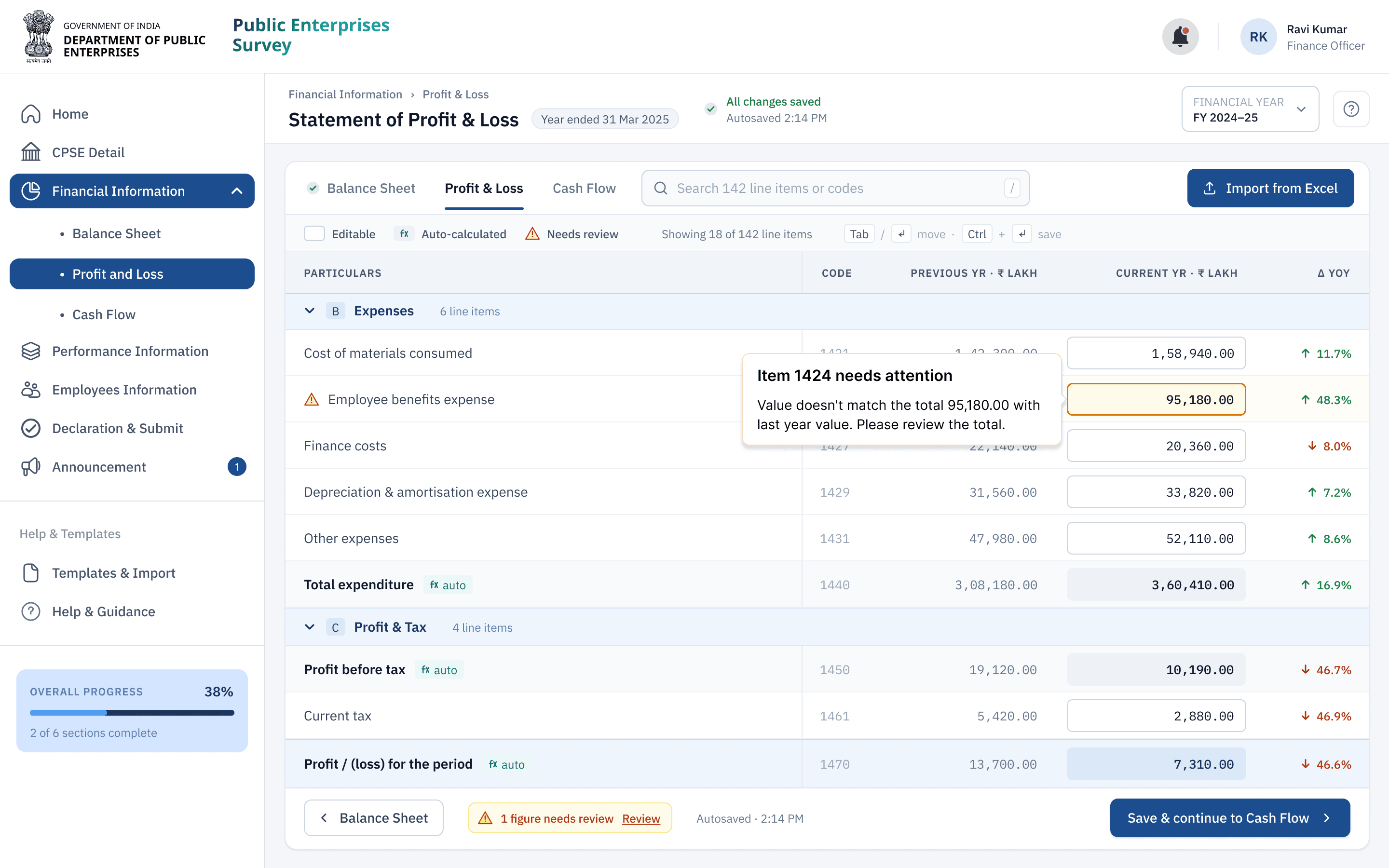
Validation maps each value to its portal field by item code and surfaces only what needs a second look — flagged figures still import and stay editable, so a single ambiguous number can't hold up a filing.
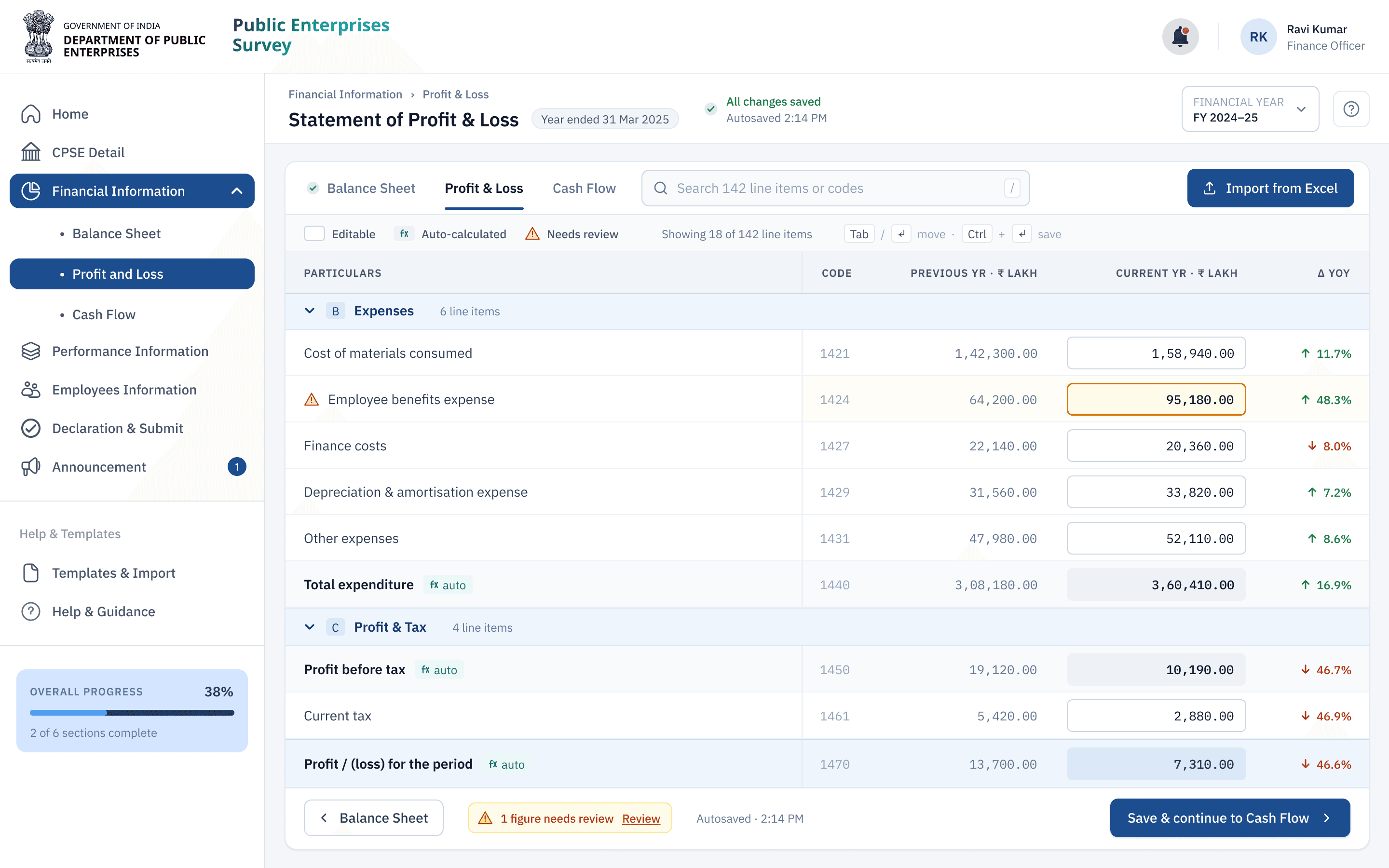
Where data still gets entered by hand, the interface borrows Excel's grammar — frozen header and first column, grouped rows, keyboard navigation, and a clear split between editable and auto-calculated cells — so muscle memory carries over instead of fighting the screen.
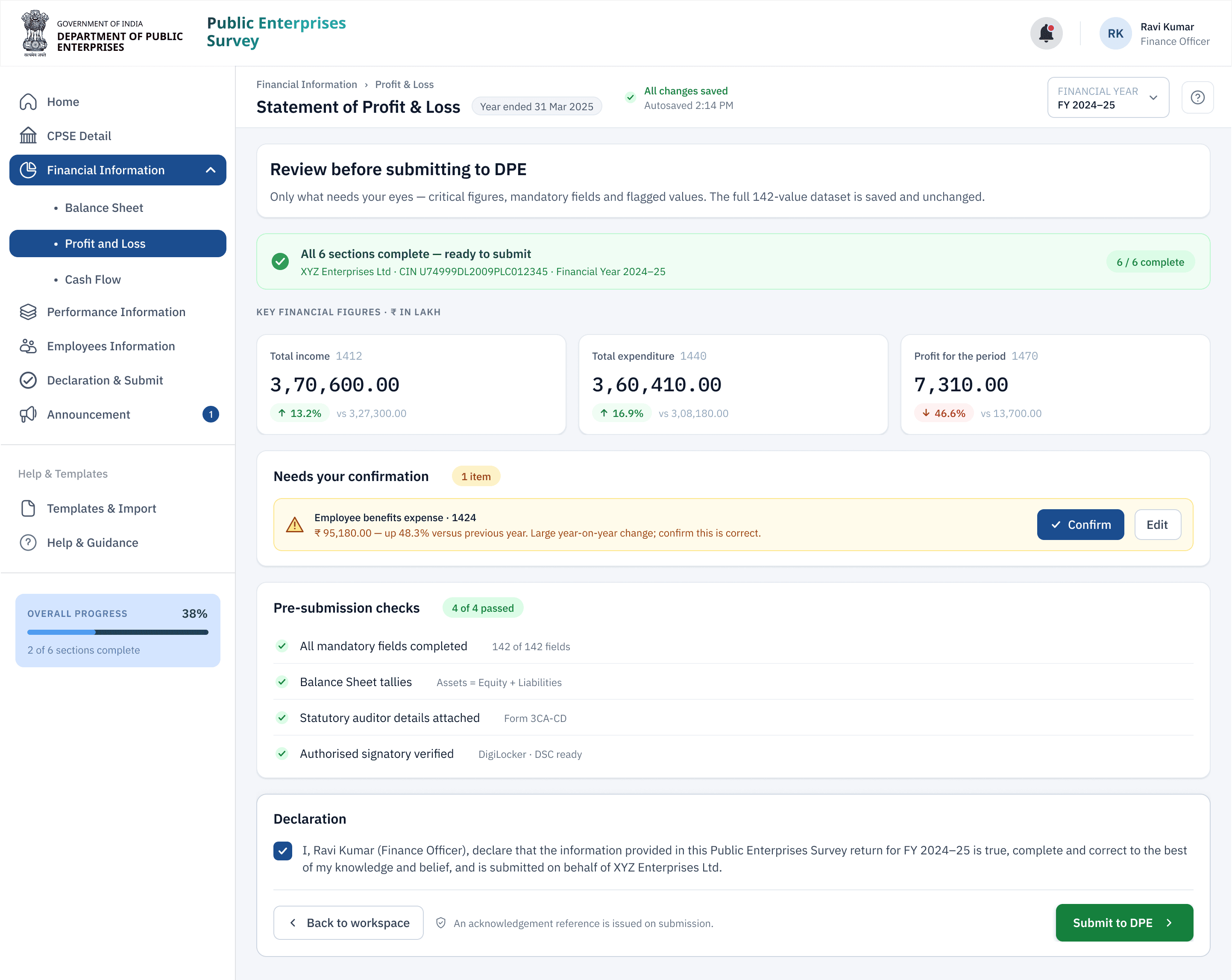
The old review asked people to re-verify everything, which meant nobody verified anything closely. The new one shows only what actually needs a human's eyes — key figures, flagged values and the mandatory checks — then the declaration.
The real fight was trust, not design.
Making a spreadsheet the front door to a report seen by Parliament set off exactly the objection it deserved. NIC's security team answered first — stamp each official template with a server-side signature, so no foreign sheet could take its place. Necessary, but not enough: a signed template still couldn't prove who stood behind the numbers inside it. So I proposed binding every upload to a person, through a C-DAC e-Sign tied to the account holder's official email.
The Joint Secretary still wasn't satisfied — until I pointed to a precedent the department already relied on: e-Office runs on e-Sign alone, and here the file never leaves the enterprise, so no outsider can touch it. That landed, and approval followed.
- NIC — portal engineering & securityThe signature scheme and the import backend.
- DPE IT leadership, up to the Joint SecretarySign-off on e-Sign as the trust model.
- Section officersWary of losing the seven-step form. I kept all seven for review. I wasn't trimming their process; I was removing the typing.
- CA & finance leadership at DPETemplate upkeep and the figures that matter.
- 25 enterprises in discovery, 37 in the pilotValidated the template against their real workbooks.
I made one deliberate bet: lock every cell but the inputs, so any workbook that kept its structure could be trusted to import cleanly. A few enterprises broke the structure anyway — so I redesigned the import to fail softly rather than dead-end: a broken workbook lets the user skip the failed import and key straight into the same flow, instead of being turned away to start over. I made the bet because I'd planned for the day it wouldn't hold.
Finance professionals navigate by keyboard, work in long sessions, and can't afford to lose a morning's input. So the redesign was keyboard-first, saved progress automatically after every field, and held to accessibility standards as a baseline rather than a finishing touch. None of it photographs well. All of it is why people trusted the new flow under deadline pressure.
I also pushed to open the submission window a month earlier than usual — clearances across several departments, and a few rooms where the answer started as a flat no (and a raised voice or two). With the NIC HOD backing the case, I got it. Then I put the flow in front of 37 enterprises before full rollout, and the test earned its keep: people couldn't always tell whether every value had imported cleanly. So the design grew per-field error states — a missing or mismatched value surfaces against its own field code — with inline tooltips and a first-run walkthrough. It shipped within the month.
What actually changed.
The redesign didn't add technology so much as remove redundant work — and the time came straight back. Figures come from a post-rollout survey of around 100 finance staff across participating enterprises.
“Now the portal works the way I already work. I'm not reporting the year twice anymore.”
What this taught me.
The design was the easy half. The real work was earning trust — convincing the people who guarded the portal that the safest thing they could do was let go of it, and that a spreadsheet carrying a government signature was more accountable than a form filled in by hand.
It's the lesson I keep relearning in enterprise UX: you rarely win by introducing a new tool. You win by understanding the one people already trust — then doing the slow, unglamorous work of getting everyone who protects the system to trust it too.
Impact figures come from a post-rollout survey of around 100 finance staff across participating enterprises. Screens are shown with the department's permission — dummy data, no enterprise names, and some steps abstracted to respect government confidentiality. Happy to go deeper in conversation.